zowin8.co Flash Update: Key Player Missing for Midweek European Clash
zowin8.co Flash Update: Key Player Missing for Midweek European Clash
Initial reports circulating across multiple outlets indicate an unexpected withdrawal driven by acute fitness management rather than a documented injury. Tactical analysts expect an immediate reshuffle in the middle third, forcing managerial staff to introduce alternative personnel within the opening forty-five minutes of play. Verified club communications and medical protocols should take strict precedence over third-party trackers before any public reaction or strategic adjustment is considered.
What followers are actually looking for when they type this headline
The sudden appearance of a flash update regarding a missing squad member triggers a predictable wave of queries. Users are not simply asking whether the athlete is unavailable; they want to know how quickly the information will be formalized, what alternatives exist, and whether the situation qualifies as temporary or structural. In modern European competition cycles, midweek fixtures arrive with compressed recovery windows, making sudden withdrawals particularly consequential. Readers scan for clarity on three fronts: the origin of the announcement, the projected timeline for a confirmed replacement, and the downstream effects on both on-field formations and off-field expectations.
Misinformation travels faster than official clarifications. When a high-profile name drops out of a preview lineup, casual observers often assume worst-case scenarios without waiting for structured follow-ups. Experienced followers, however, pause to evaluate whether the report stems from a routine training-ground observation, a precautionary rest decision, or a genuine physical setback. They also look for consistency between the flash notification and the broader context of the squad rotation policy during congested schedules. Understanding this distinction separates reactive speculation from informed anticipation.
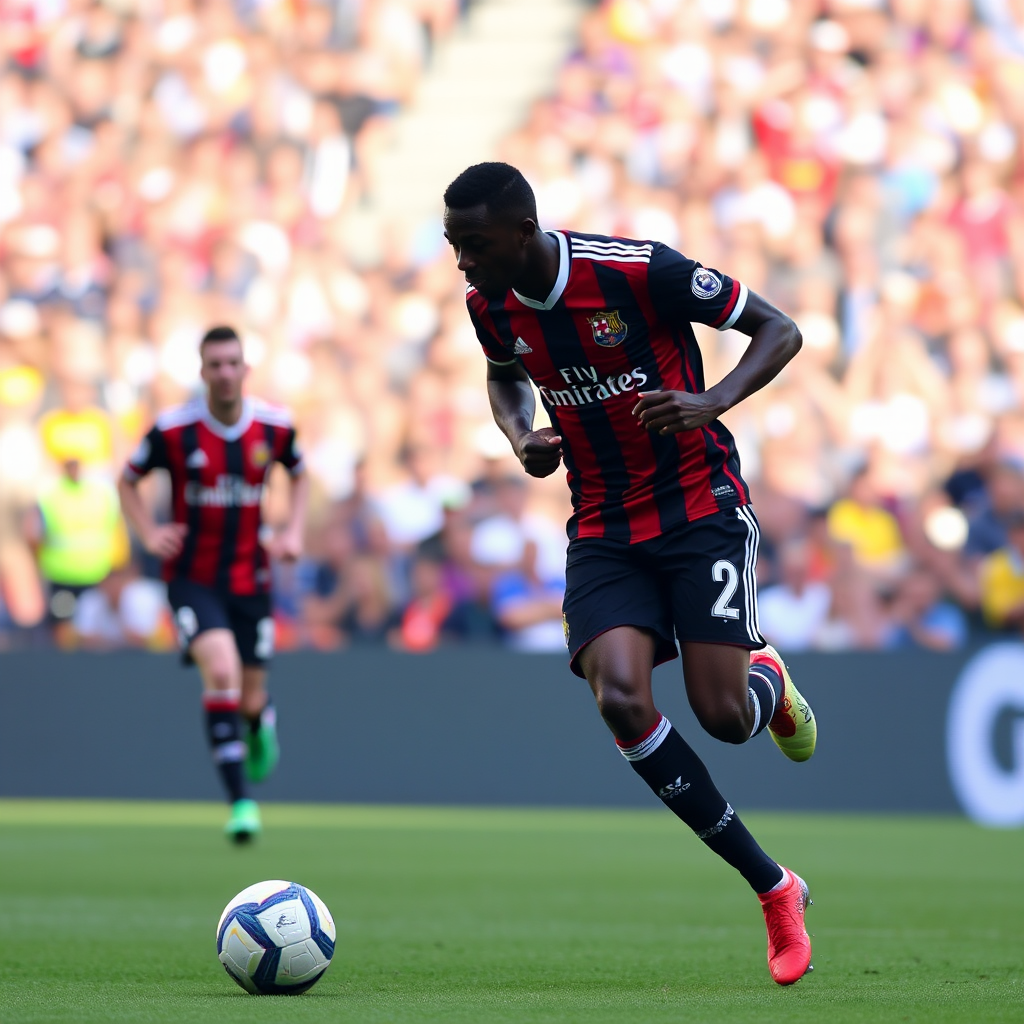
 Hình minh hoạ: https://zowin8.co/
Breaking down the current situation and its wider context
The flash update centers on a single roster alteration ahead of a heavily scheduled European round fixture. The initial framing suggests an abrupt exclusion rather than a gradual decline in availability. Such notifications typically emerge when coaching staff prioritize preservation over participation, especially when domestic and continental obligations overlap. The absence of a primary contributor alters preparation dynamics, shifting emphasis from rehearsed patterns to adaptive game models that accommodate lesser-known personnel.
European competitions demand continuous tactical flexibility. Clubs frequently rotate squads to manage workload, yet midweek clashes leave limited room for experimental lineups. When a key operator is listed as missing, the immediate consequence is a redistribution of defensive transitions and forward build-up responsibilities. The coaching group must evaluate bench depth, identify players capable of filling specific roles, and adjust set-piece routines accordingly. This process rarely unfolds overnight, which explains why the flash nature of the update creates uncertainty among observers who expect swift resolution.
Historical patterns show that many high-profile exclusions resolve into minor disruptions rather than systemic weaknesses. Clubs with established development pathways usually possess hidden assets capable of stepping in without destabilizing the core strategy. Conversely, organizations reliant on isolated star performers face steeper adjustment curves. Evaluating the current scenario requires separating emotional reactions from structural realities, recognizing that a single missing component rarely determines match outcomes without compounding factors.
How the announcement typically unfolds and how observers should track it
News cycles around roster changes follow a recognizable progression. Understanding this sequence helps reduce noise and focus attention on credible developments.
- Initial sighting phase: Training ground observations, local journalist leaks, or social media glimpses generate early whispers. At this stage, everything is provisional. Physical discomfort during drills, sudden substitutions in practice matches, or altered rehabilitation routines often trigger preliminary alerts.
- Flash notification phase: A rapid post or headline appears, often lacking medical documentation or managerial confirmation. This is where the current update resides, and it serves primarily as an early warning system rather than a finalized statement.
- Official acknowledgment phase: Club websites, press offices, or accredited league portals publish standardized injury lists, travel roster submissions, or pre-match press releases. Timing varies by competition regulations, but European bodies typically require squad submissions twenty-four to forty-eight hours before kickoff.
- Tactical clarification phase: The head coach outlines replacements, adjusts formation shapes, and explains positional swaps during briefings. Observable shifts in warm-up routines, jersey distribution, or substitution patterns confirm actual gameplay adjustments.
- Post-match evaluation phase: Statistical tracking, performance metrics, and manager commentary reveal whether the substitution created stability or introduced vulnerability. This phase provides retrospective validation of earlier speculation.
Observers benefit from mapping their attention to these phases rather than fixating on the earliest alert. Jumping straight to conclusions during the flash notification phase guarantees misalignment with eventual realities. Patience yields accurate projections, especially when tournament stakes elevate the cost of premature judgment.

Risks of acting on early signals and how to validate them properly
Sudden roster changes create fertile ground for distorted narratives. Markets react quickly, fan forums amplify assumptions, and media outlets compete to own the first exclusive. This environment produces several measurable risks that warrant systematic mitigation.
Information asymmetry remains the primary concern. Third-party trackers frequently misinterpret routine workload management as injury-related exclusion, leading to inflated panic. Without access to internal medical evaluations or staffing meetings, external observers cannot distinguish between precautionary rest and genuine physical compromise. Treating speculative alerts as confirmed facts disrupts logical planning and generates unnecessary volatility.
Secondary risks involve conditional decision-making. Casual supporters may alter viewing plans, investors in related platforms may adjust positions prematurely, and fantasy managers might overwrite drafted selections based on incomplete data. Each of these behaviors compounds error when the initial report proves inaccurate or outdated. Validation requires cross-referencing multiple independent streams before committing to any action.
- Check official club channels first, prioritizing press releases and accredited social media accounts over independent aggregators.
- Verify submission timelines required by the competition organizer to understand whether the squad window has already closed.
- Compare the flash claim against recent training footage, travel list disclosures, and pre-match warm-up observations.
- Monitor manager press conferences for direct language regarding availability, usage limits, or positional adjustments.
- Avoid market engagement until at least two authoritative sources align on the same status and timeline.
Applying this framework reduces exposure to false positives. It also preserves analytical integrity, ensuring that conclusions stem from documented developments rather than viral momentum. Verification becomes a disciplined process rather than a reactive reflex.

Frequently asked questions about the midweek absence
Is the reported absence confirmed or still provisional?
At this stage, the status remains provisional. Flash updates function as early indicators, not finalized declarations. Confirmation depends on official squad submissions, medical documentation, and managerial acknowledgment, all of which typically follow regulatory timelines rather than immediate publication.
How quickly will a replacement be named or integrated?
Replacement identification often occurs during daily training assessments. Coaching staff monitor performance levels, fitness markers, and tactical compatibility to determine suitable alternates. Formal designation usually coincides with the updated travel roster or pre-match press conference, depending on competition deadlines.
Does this shortage significantly alter the expected outcome of the fixture?
Single-player exclusions rarely dictate results in isolation. Squad depth, opponent strength, venue conditions, and in-game management carry equal weight. The primary impact lies in initial tempo, transition responsibility, and set-piece execution during the opening stages. Adaptation capacity determines whether disruption translates into lasting disadvantage.
Where should observers track reliable follow-up information?
Authoritative updates originate from the club's official communications department, the competition's governing body portal, and accredited sports journalists with direct access to dressing rooms and medical facilities. Cross-checking these sources minimizes exposure to unverified claims.
Action steps before the fixture concludes
Managing the fallout from a sudden roster alteration requires disciplined execution. The following checklist structures response behavior, ensures information integrity, and prevents reactive decisions from distorting longer-term perspectives.
- Pause and log the original source: Record the exact wording, timestamp, and platform of the flash update. Compare it against later posts for alterations or expansions.
- Identify competition deadlines: Confirm when squad submissions close for this European round. Early exclusions lose relevance if administrative locks have already occurred.
- Map positional requirements: Break down the missing player's responsibilities into passing networks, defensive coverage zones, and pressing triggers. Determine which bench options replicate these functions most closely.
- Watch training ground activity: Observe warm-up groupings, substitution patterns, and individual load monitoring during the day before kickoff. Operational adjustments become visible long before official announcements.
- Delay secondary commitments: Postpone viewing schedule changes, platform position adjustments, or content scheduling until managerial briefings confirm actual lineups and tactical shifts.
- Reassess after sixty minutes: Match flow reveals true adaptation quality. Early instability often resolves as familiarity builds, while persistent friction highlights deeper structural gaps.
Following this sequence transforms uncertainty into manageable variables. It removes emotional urgency, replaces speculation with structured observation, and aligns expectations with verified developments. The football calendar rewards patience, and midweek European rounds consistently demonstrate that early headlines rarely capture final realities.
For ongoing official statements and verified squad confirmations, further reference: https://zowin8.co/.